

The “Coronavirus Disease 2019″: an epidemic that could become a global pandemic.
COVID-19 emerged in a densely populated hub in central China and has since spread to 29 other countries and regions (as of 20 February 2020), carried along by Chinese New Year and international travel.
In contrast to Ebola emergency of 2013-2016 in the Western Africa– more deadly but less contagious, arguably more isolated, and eventually contained in part by richer countries putting money into Africa – COVID-19 is affecting a larger audience, with more interdependent economies.
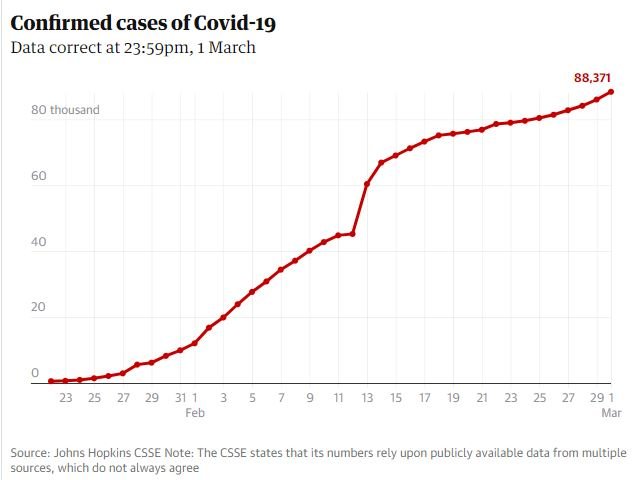
It has also surfaced at a time of eroding trust within and between countries – with national leadership under pressure from growing societal unrest and economic confrontations between major powers.
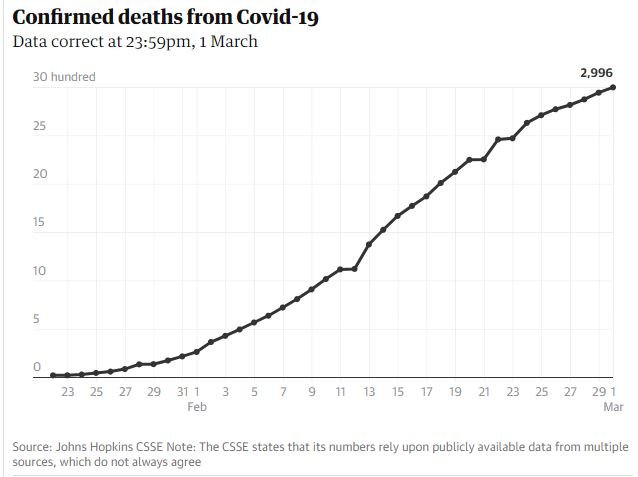
It has also surfaced at a time of eroding trust within and between countries – with national leadership under pressure from growing societal unrest and economic confrontations between major powers.
Effective governance of cross-border crises such as pandemics involves preparedness, response and recovery at local, national and international levels. Epidemic preparedness assessments show many countries, especially in regions where new pathogens might emerge, are not well equipped to detect, report and respond to outbreaks.
A China outlook
With millions of workers in quarantine and parts in short supply, China is struggling to get economic activity back on track.
- Travel restrictions and quarantines affecting hundreds of millions of people have left Chinese factories short of labour and parts, disrupting just-in-time supply chains and triggering sales warnings across technology, automotive, consumer goods, pharmaceutical and other industries.
- Commodity prices have declined, following a fall in China’s consumption of raw materials, and producers are considering cutting output.
- The mobility and work disruptions have led to declines in Chinese consumption, squeezing multinational companies in several sectors (aviation, education abroad, infrastructure, tourism, consumer and luxury goods, hospitality, entertainment, hospitality, electronics).
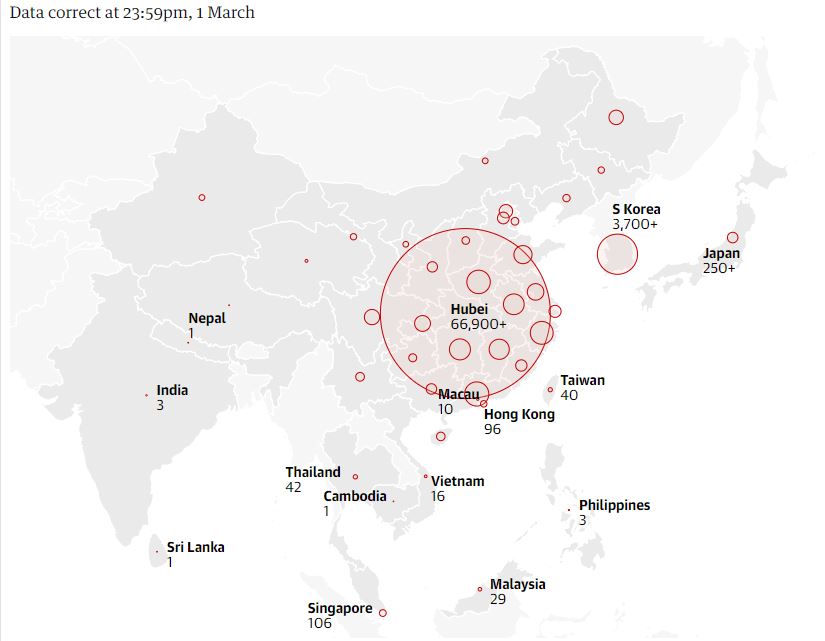
Overall, China’s GDP growth may slow by 0.5% points this year, taking at least 0.1% off global GDP growth.
This will ripple through developed and emerging markets with high dependencies on China, regarding trade, tourism or investment.
Some of these countries exhibit pre-existing economic fragilities, others (acknowledging an overlap) have weak health systems and thus lower resilience to pandemics. Many Asian and African countries lack surveillance, diagnostic, and hospital capacities to identify, isolate, and treat patients during an outbreak. Weak systems anywhere are a risk to health security everywhere, increasing the possibility of contagion and the resulting social and economic consequences.
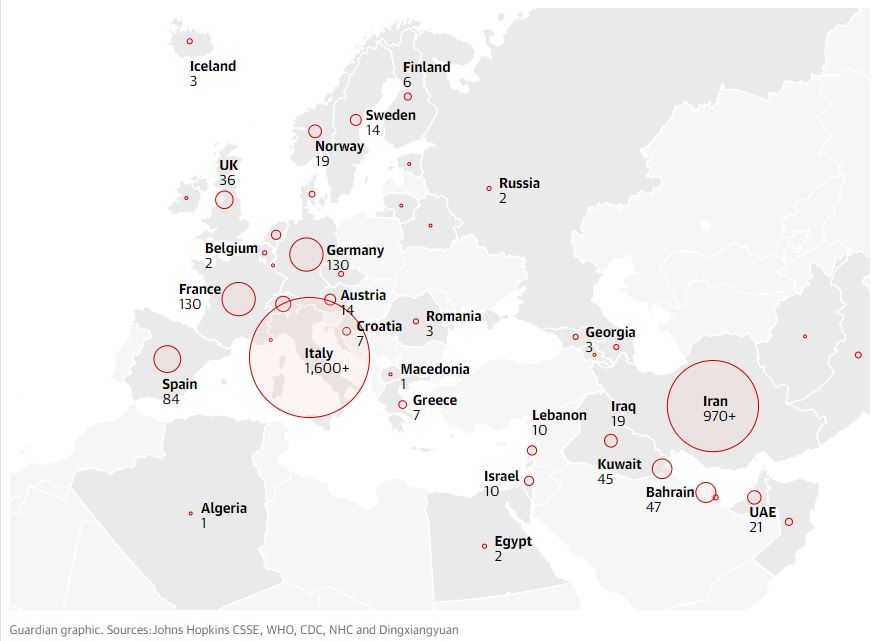
Coronavirus compared with SARS
- Coronavirus has spread much more quickly than SARS or MERS.
- Coronavirus seems to be less deadly than either SARS or MERS.
- It will take several weeks to be confident about how the virus behaves, including its mortality rate.
International alarm over the coronavirus that emerged in Wuhan, China, in December is driven by its rapid spread and the fact that infectious disease experts cannot yet know how deadly or contagious it is.
The latest statistics indicate a fatality rate of about 2.2%, but disease experts say the actual rate may be higher or lower as there are likely more unconfirmed cases.
The SARS virus killed about 10% of all infected individuals, while the MERS outbreak identified in 2012 had a fatality rate of around 35%.